
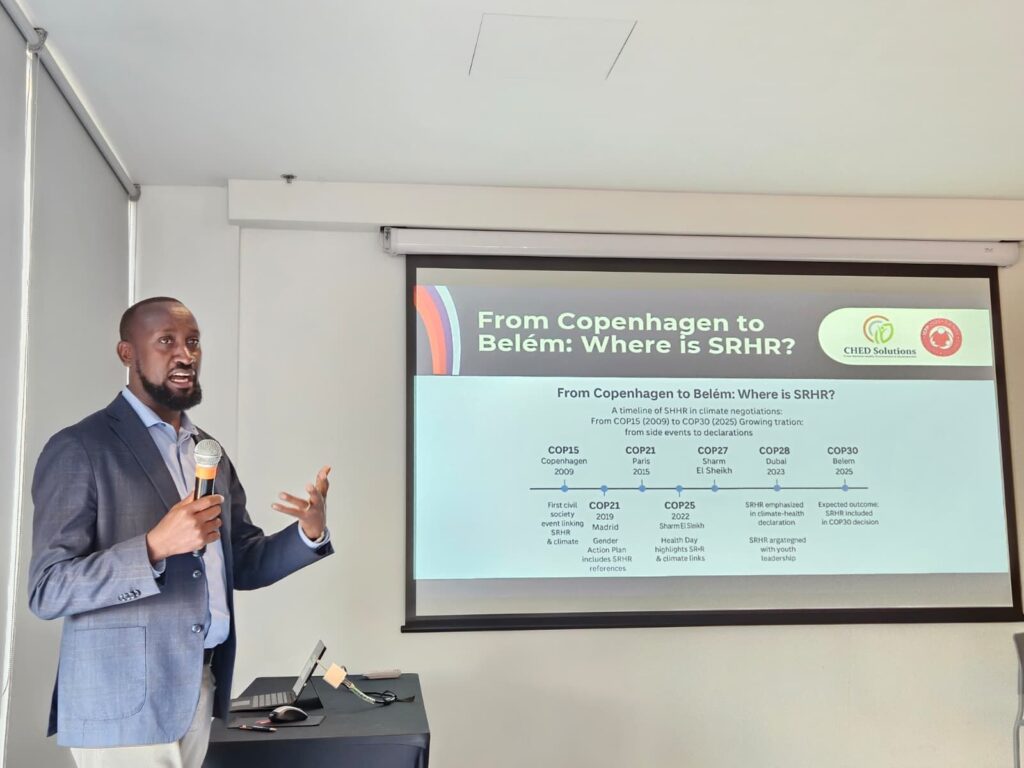
From Bogotá to Belém — and Beyond: A Journey of Voices, Courage, and Connection
When I walked into that room in Bogotá on November 7th , just hours after the close of the International Conference on Family Planning (ICFP) 2025, I felt something I haven’t felt in a long time in global policy spaces: a collective heartbeat.
Not the rush of a conference or the buzz of technical jargon, but something deeper.
A sense of purpose.
A sense of family.
A sense that the people in that room — youth advocates, climate negotiators, Sexual Reproductive Health and Rights (SRHR) champions, researchers, friends — were ready to build something that would outlive us.
I’ve spent many years working at the intersection of SRHR and climate change. I’ve written analyses, contributed to coalitions, supported youth networks, argued for integration in policy rooms that often didn’t want to hear it. I’ve sat with data, with stories, with communities whose lives are already shaped by a climate crisis they did not create.
But Bogotá felt different.
Bogotá: Where Resolve Became Real
That morning, as we gathered for the “From Bogotá to Belém” convening, I could see the richness of our movement reflected in the faces in the room:
A young advocate from Colombia who spoke with the clarity of someone fighting for her own future.
Voices representing Indigenous communities who have lived climate impacts for generations — reminding us that climate knowledge is not new, but ancestral.
A colleague from Africa describing what it means to run health programs during floods and droughts.
A disability rights ally reminding us that no climate response is complete without inclusion.
Partners from UNFPA, Pathfinder International, Panorama Global, Population Institute, Population Council, Regenerate Africa among others— each carrying years of work, frustration, hope, and courage.
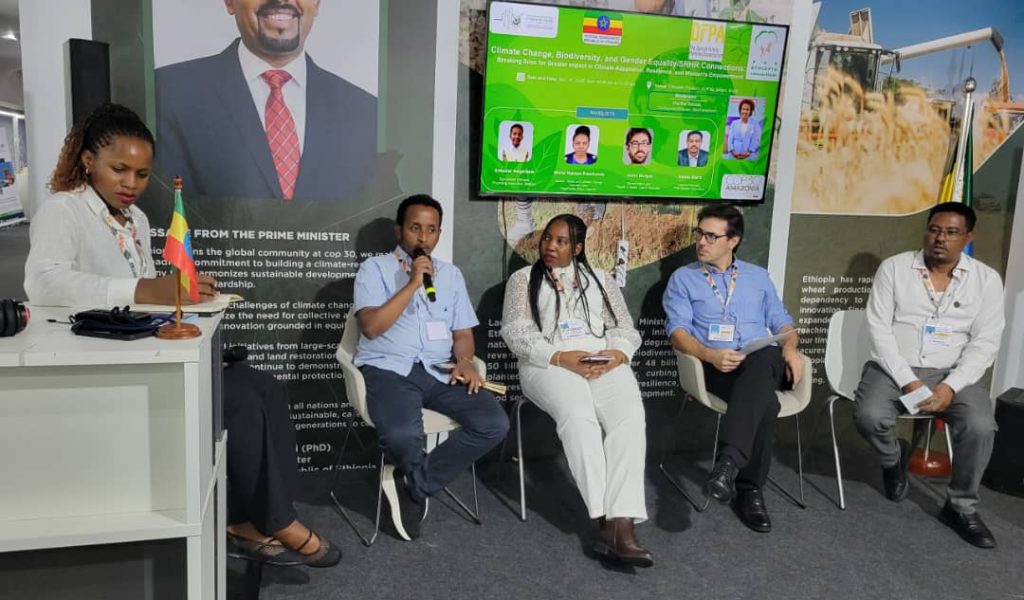
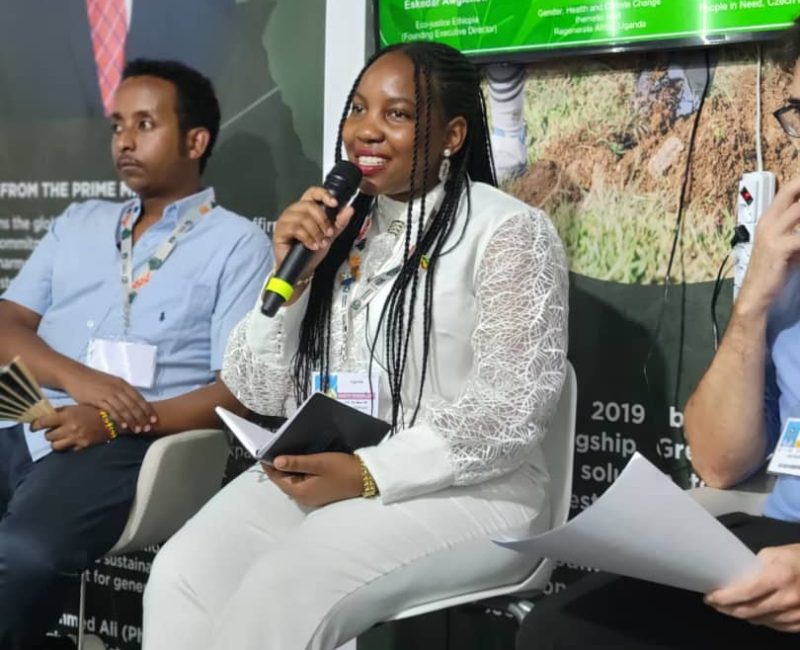
Panelists at a SRHR and Climate Change event at COP30.
When I spoke about the journey of SRHR in climate negotiations, from COP15 to now, I felt the weight of time. A painful reminder that we’ve been calling for recognition for over a decade, and yet SRHR remains largely invisible in climate frameworks.
And yet…
That day, something shifted.
People were not just listening, they were ready.
Ready to act.
Ready to work together.
Ready to say, “Enough waiting. We’re carrying this agenda to Belém and beyond.”
Belém: What We Carried — and What We Found
The next day, a number of the people in that room boarded flights to Brazil.
Some entered formal negotiations.
Others shared evidence and stories in side events and pavilions.
Some held space for communities whose realities are rarely heard in global halls.
All carried the Bogotá–Belém Declaration — not as a file, but as a promise:
That SRHR would not be sidelined in climate policy again.
That youth would not just be invited, but centered.
That Indigenous knowledge would be valued, not tokenized.
That disability inclusion would be non-negotiable.
That gender justice would be a demand — not an optional theme.
That climate finance would finally recognize SRHR as resilience.
And now, as COP30 closes, we can see what that collective courage helped shift — and what remains ahead.
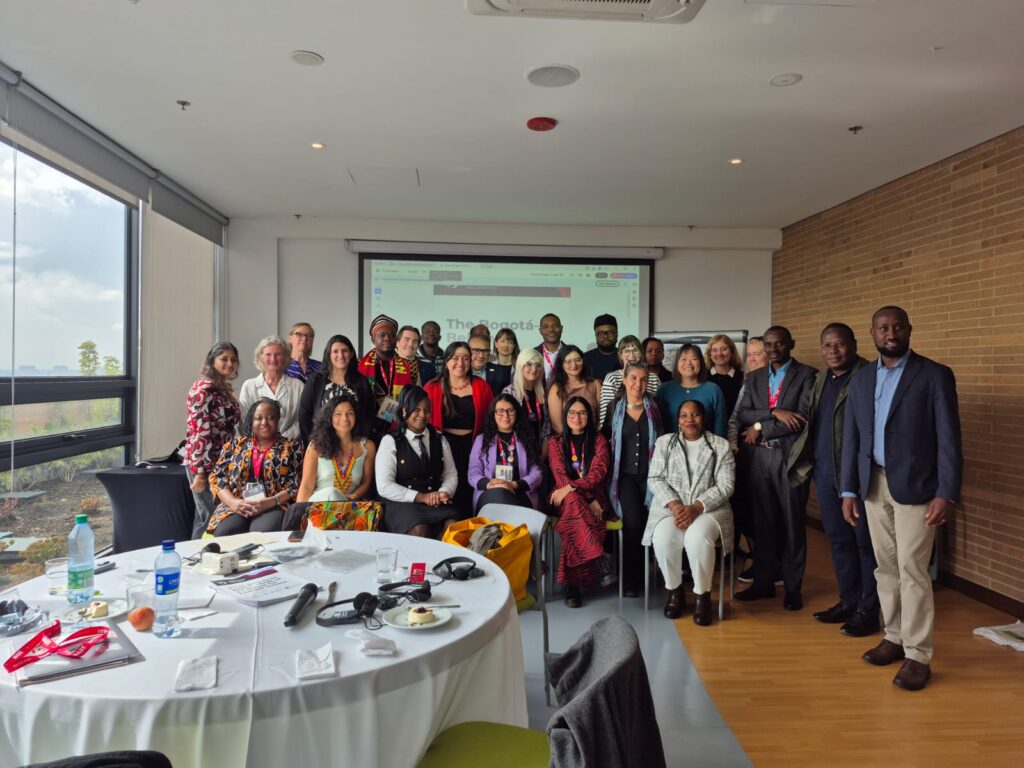
Group photo of participants attending ICFP2025 post conference event
What We Achieved in Belém
SRHR did not appear in the final negotiated text — but this year, it echoed in rooms where it had never been spoken before.
It surfaced in adaptation dialogues, in youth interventions, in the Health, Gender, and Indigenous People Pavilions.
It was defended, albeit sometimes not so loudly, when some tried to shrink gender language.
It was named by governments who had never spoken to SRHR in climate contexts.
And that matters.
Narratives shift before policies do.
What Still Remains
Funding mechanisms still overlook SRHR.
Data systems still erase gendered and rights-based impacts.
Participation remains uneven — especially for youth, Indigenous peoples, and persons with disabilities.
Negotiated texts remain silent where clarity is needed.
Belém did not give us everything.
But it gave us direction.
Beyond Belém: Where the Real Work Begins
If Bogotá was the spark, and Belém was the flame, then beyond Belém is the long walk toward justice.
And I believe we are ready.
CHED Solutions, and I personally, am committed to working with partners to:
- Build a global, cross-movement community that keeps this agenda alive.
- Support countries to integrate SRHR into national climate policies and finance proposals.
- Document and amplify voices from communities already living the climate crisis.
Strengthen evidence that ties SRHR to adaptation and resilience. - Develop tools governments can use to translate conversations into policy.
- Ensure youth, Indigenous leaders, and persons with disabilities shape every step of the journey.
Because climate action without rights is not justice – and climate policy without people is just paperwork.
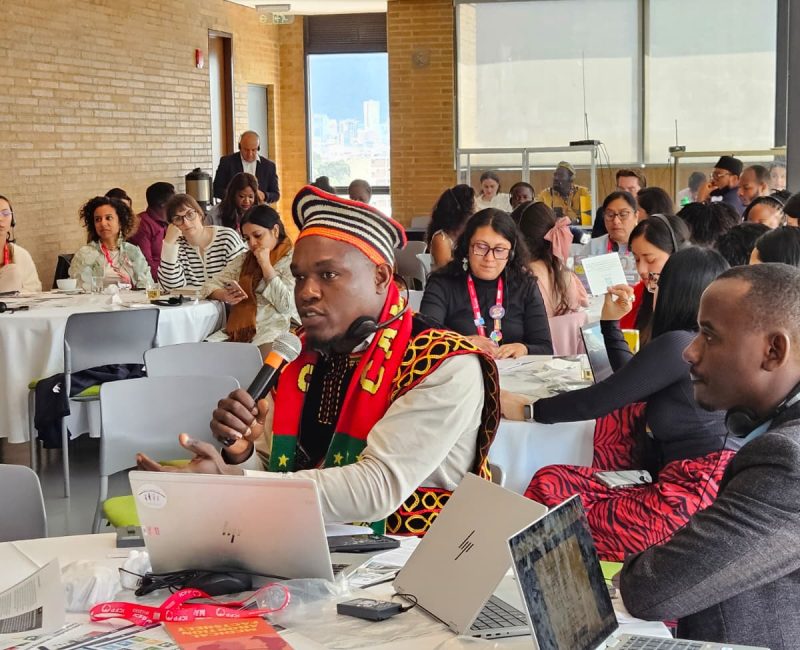
Participants attending the post-conference event shared valuable reflections and new insights.
A Closing Thought
As I look back on the journey from Bogotá to Belém, what stays with me are not the formal statements or the negotiation outcomes, but the people — their stories, their urgency, their courage.
We did not win everything in Belém. But we stood together. We made our presence felt. We opened doors that had been closed. We carved space where there was none.
And that is how movements move.
The journey continues.
from Bogotá,
to Belém,
and far, far beyond.
And I hope you walk it with us.
About the Author
Clive Mutunga is the founder of CHED Solutions, bringing over 20 years of experience in strategy, policy, and program design across government, NGOs, multilateral agencies, and consulting. A systems thinker and collaborative leader, he specializes in policy advocacy, strategic communication, and building impactful partnerships. Previously, he led the USAID-funded BUILD project at AFIDEP and served as a Senior Advisor at USAID. Clive holds a Master’s in Economics, focusing on environment and natural resources, and is committed to advancing sustainable, integrated solutions through CHED Solutions.
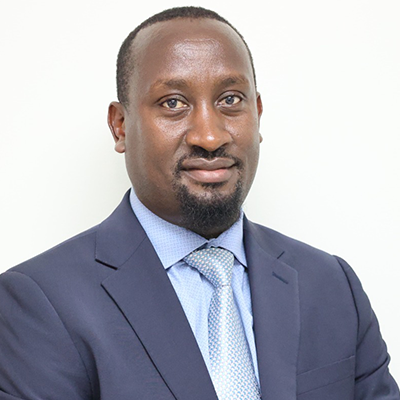
Clive M. Mutunga
Founder, CHED Solutions