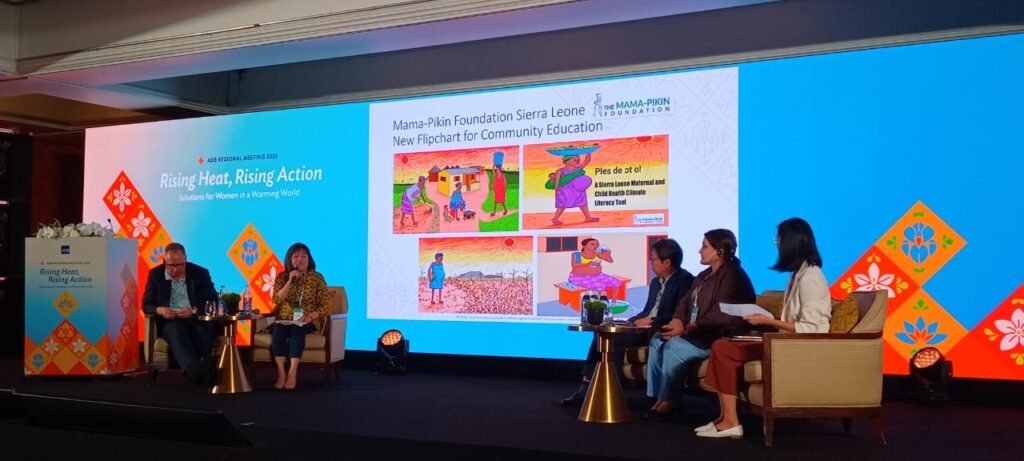
As temperatures surge globally, the Asian Development Bank’s “Rising Heat, Rising Action” meeting last week in Bangkok brought together an extraordinary coalition of leaders—about 140 policymakers, scientists, philanthropists, architects, urban planners, and grassroots organizers across six Asian countries—with one urgent message: heat is not just a climate issue—it’s a public health crisis, a gender equity challenge, and a development threat.
Heat: The Silent Killer of Our Time
“Of all climate disasters, heat is the most deadly—and the most invisible,” said Samantha Hung, Director at ADB’s Gender Equality Division. The meeting opened with a stark reality: heat doesn’t strike with the spectacle of hurricanes or floods, but it quietly kills, particularly the most vulnerable—women, outdoor workers, the elderly, and children. The meeting focused on knowledge-sharing, but also to strengthen commitments and technical capacity to integrate gender perspectives into every aspect of climate adaptation.
Why Women Are at the Center of the Crisis
From Bangkok, Thailand to Sindh Province in Pakistan, from garment factories to rice fields, women are disproportionately impacted by extreme heat. They work longer hours, face more health risks, and often lack access to protective infrastructure. Yet, as many speakers emphasized, they also hold the keys to community resilience.
As one of the invited panelists, I was able to lead the audience through a visualization of being a postpartum woman trying to survive in blazing heat in a remote rural village, without electricity. The baby is crying, the heat unbearable, and the nearest clinic is a 30-minute walk away. She cannot sleep and has no appetite, yet she shoulders the burdens of household chores and caregiving. This is not fiction—it’s the daily reality for millions.
From Data to Design: What Works
Women’s unique physiological responses to heat, compounded by social roles and clothing norms, make them more vulnerable. Concrete, gender-sensitive solutions took center stage:
- Cooling Relief Centers in Melbourne, Australia welcome women and children with cold drinks, games, and caregiving support.
- Parametric heat insurance in India pays women daily compensation when temperatures exceed thresholds.
- Reflective roofing projects in Indonesia, co-designed by women, cool homes.
- Urban tree-planting and green corridors in Singapore and Thailand lower urban heat islands while creating jobs and leadership opportunities for women.
Policy and Plans, Not Just Pledges
Multiple speakers called for integrated governance. Heat should not sit in isolation within disaster risk frameworks—it must be embedded in urban planning, health systems, and gender action plans. The Asian Development Bank urged countries to leverage what already exists: the adaptation tools, policy levers, and global frameworks. Now we must fill the gap in financing and implementation.
From Innovation to Implementation
Entrepreneurs also took the stage to show what’s possible, including:
- Coolar, a German company whose refrigerators use water-based cooling without electricity;
- Eztia, an American company that invented polymer-based technology to create wearable cooling gear;
- IBISA, a Luxembourger company that designs index-based parametric insurance solutions for weather-related risks in Asia and Africa; and
- RainbirdGEO, a South Korean company that works on climate disaster early warning systems for last-mile communities.
Yet, many stressed: innovation must be community-rooted, not tech-imposed.
A Call to Center Gender in Climate Finance
Delegations from Pakistan, Cambodia, and the Philippines shared action points such as integrating heat into gender and disaster action plans, and mainstreaming climate education and gender awareness in government ministries. Participants all agreed: let’s not let perfection be the enemy of good. Customize or replicate existing models, and scale what works. We have enough data to act, so what’s needed now is bold, gender-transformative funding and governance.
In a world warming rapidly, gender-blind solutions will fall short. The message from this meeting was clear: put women at the heart of heat resilience—and we all stand a better chance of surviving and thriving.
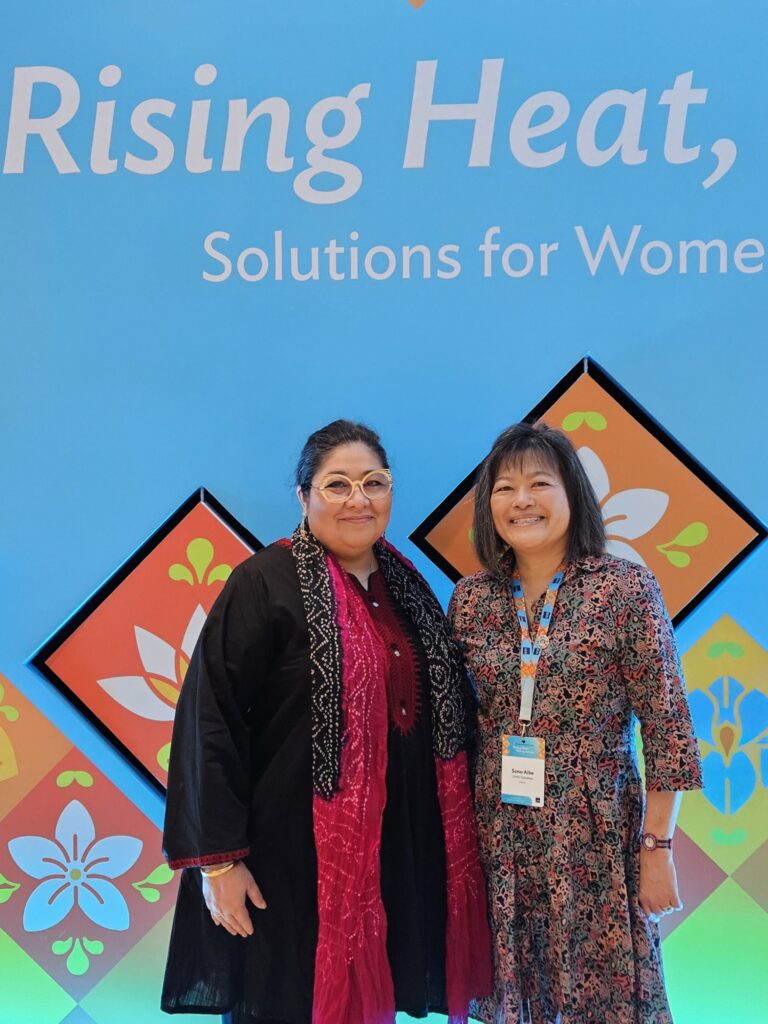
The author with Zonibel Woods, Senior Social Development Specialist (gender and development) at ADB in charge of this six-country technical assistance project.
About the Author
Sono Aibe has worked in reproductive health philanthropy and in the design and implementation of health and community development programs across the United States, Asia, and Africa. Her life’s work is to foster interdisciplinary policies and initiatives that integrate reproductive health and justice with environmental concerns, including the urgent challenges posed by the climate crisis. Sono holds a Master of Health Science from the Johns Hopkins Bloomberg School of Public Health and a degree in the History of Science from Harvard University.

Sono Aibe
Principal Consultant,
CHED Solutions